
Bubastis
Tell Basta; Phibeseth
Temple (Third Intermediate Period, 22nd Dynasty); temples (6th Dynasty, 12th Dynasty, 18th Dynasty, 22nd Dynasty, Graeco-Roman Period); tombs (Old Kingdom, 19th Dynasty-20th Dynasty); animal cemetery (Third Intermediate Period-Roman Period)
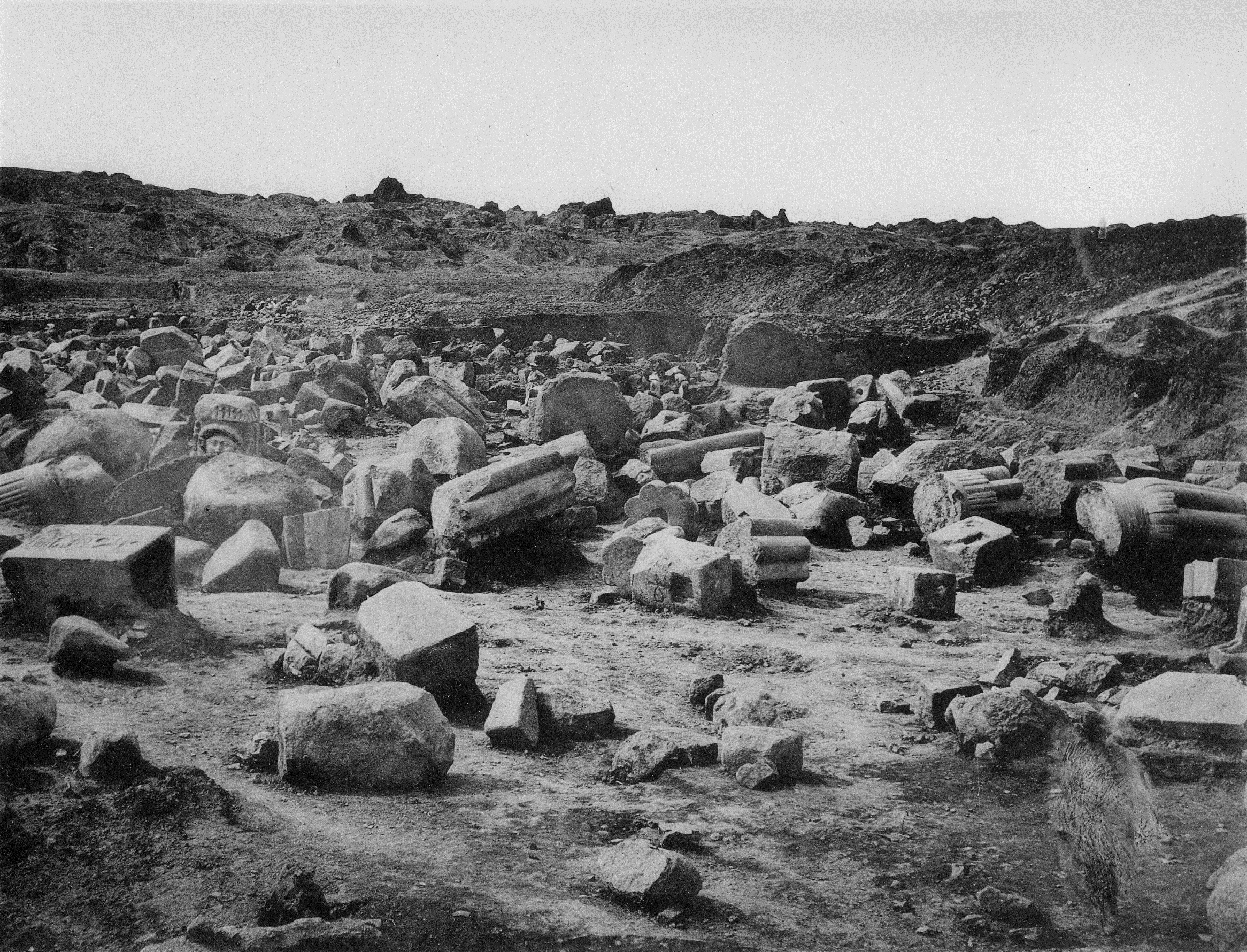
The large town stands at the crossroads of trade routes from Memphis to Sinai and further to the east. The temple of Bastet, a major cult centre for the lion headed goddess, is the major architectural focal point. The architectural landscape of the temple and the religious ceremonies associated with the worship of Bastet were recorded by Herodotus and excavations have confirmed aspects of his description including that the temple stood on an island. Other buildings at the site include ka temple of Teti and Pepy I, sed-festival chapels of Amenemhat III and Amenhotep III, a possible palace from the Middle Kingdom, and a temple of Atum built by Osorkon II. Tombs date from the Old Kingdom.
Site Gallery
Bibliography
Naville, Edouard 1891. Bubastis (1887-1889). Memoir of the Egypt Exploration Fund 8. London: Kegan Paul, Trench, Trübner & Co.
Naville, Edouard 1892. The festival-hall of Osorkon II. in the great temple of Bubastis (1887-1889). Memoir of the Egypt Exploration Fund 10. London: Kegan Paul, Trench, Trübner & Co
Spencer, Neal 2007. Naville at Bubastis and other sites. In Spencer, Patricia (ed.), The Egypt Exploration Society: the early years, 1-31. London; Oxford: Soc.; Oxbow Books.
Tietze, Christian (ed.) 2004. Baset - Βούβαστις - Tell Basta. Quellensammlung Teil I (1882-1911). Arcus 7. Potsdam: Universität Potsdam.